✓ Reviewed by the Ultimate House Team
Effective Moisture Control for Damp UK Cellars
Cellars tend to stay cooler, darker and more humid than the rest of the house, making them a common spot for condensation, musty smells and mould. The right dehumidifier can help keep moisture under control, but not every model performs well in a cold cellar. We’ve selected options suited to different cellar sizes and conditions, including models with continuous drainage for longer, hands-off operation.
» OUR TOP PICKS

01 · Best Overall
AEOCKY 25L/D Compressor Dehumidifier
Excellent
KEY DETAILS
Extraction: Up to 25L/day | Coverage: Up to 50m² | Tank: 2.7L | Low-temperature operation: Down to 10°C | Noise: From 40dB | Drainage: Continuous | Weight: 12.6kg
The AEOCKY 25L/D is a high-capacity compressor dehumidifier designed for larger damp areas, including basements. Its 50m² coverage, continuous drainage and operation down to 10°C make it particularly suitable for cellars where moisture levels can remain high throughout the year.
WHAT WE LIKE

02 · Best for Smart Control
Pro Breeze 20L OmniDry Smart Dehumidifier
Excellent
KEY DETAILS
Extraction: Up to 20L/day | Coverage: Up to 25m² | Water tank: 4L | Noise: Below 38dB | Drainage: Continuous | Control: Wi-Fi app and voice control | Modes: Auto, continuous and night | Timer: 24 hours
The Pro Breeze 20L OmniDry Smart combines compressor dehumidification with Wi-Fi control, automatic humidity sensing and continuous drainage. It is designed for spaces up to 25m² and offers useful control options when you want to monitor or adjust cellar humidity without repeatedly visiting the unit.
WHAT WE LIKE

03 · Best Budget
Devola 12L/day Low Energy Dehumidifier
very good
KEY DETAILS
Extraction: Up to 12L/day | Tank: 2L | Operating temperature: From 5°C | Noise: 36dB | Drainage: Continuous | Timer: 24 hours | Weight: 10kg | Filter: Washable
The Devola 12L/day is particularly suited to colder, unheated cellars because it can operate from temperatures as low as 5°C. It also provides continuous drainage, a washable filter and a dedicated laundry drying mode for practical everyday moisture control.
WHAT WE LIKE

04 · Best for Compact Cellar Use
ARIBIO 12L/Day Dehumidifier
very good
KEY DETAILS
Extraction: Up to 12L/day | Coverage: 15–60m² | Tank: 2L | Humidity control: 30–80% | Sleep mode: 35dB | Drainage: Hose or tank | Timer: 12 hours | Speeds: 2
The ARIBIO 12L/Day is a compressor dehumidifier with adjustable humidity control, three operating modes and two drainage options. Its combination of automatic shut-off, wheels and a drain hose makes it practical for cellar spaces where regular tank emptying may be inconvenient.
WHAT WE LIKE

05
LEENON 12L/Day Compressor Dehumidifier
Good
KEY DETAILS
Extraction: Up to 12L/day | Tank: 1.6L | Humidity control: 30–80% | Noise: From 36dB | Drain hose: 2m | Timer: 24 hours | Modes: 3 | Drainage: Continuous
The LEENON 12L/Day is aimed at damp home environments and includes a 2m drain hose for continuous drainage. Its adjustable humidity control, automatic restart and quiet sleep mode make it a practical option for cellars that need regular moisture management.
WHAT WE LIKE
Buying Guide & FAQ
Why Humidity Control is Crucial for Cellars
Cellars are particularly prone to high humidity levels due to their location below ground. This environment can cause several issues:
- Mould and Mildew Growth: These fungi thrive in damp conditions and can cause health problems as well as damage to stored items.
- Unpleasant Odours: Musty smells often accompany high humidity and can permeate stored items, making them unpleasant to use.
- Pest Infestation: Many pests are attracted to moist environments, leading to further damage and hygiene issues.
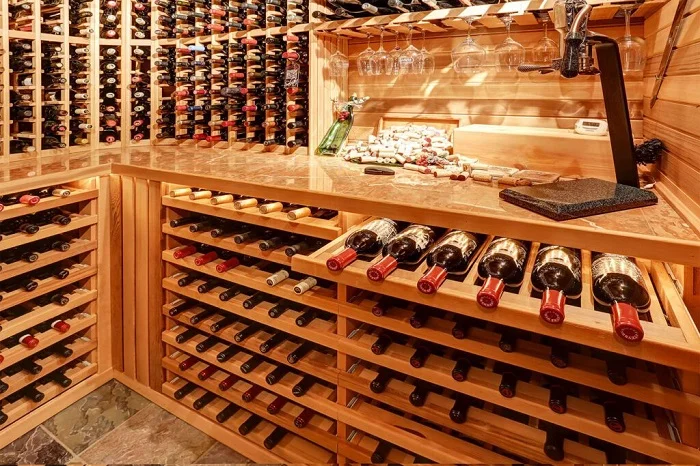
- Dehumidifier for Wine Cellar: Wine requires a stable environment to age correctly, with ideal humidity levels between 50-70%. Too much moisture can cause labels to peel and mould to grow, while too little can dry out corks, allowing air to spoil the wine.
What to Look for in a Cellar Dehumidifier
A cellar can be colder and less ventilated than the rest of the house, so choosing by the biggest litres-per-day figure alone can be misleading. Check the temperature range, extraction method and how you will get rid of the collected water before looking at extra features.
Check the Cellar Temperature
This is one of the most important things to get right. Refrigerant dehumidifiers generally work better in warmer rooms and can lose performance as temperatures fall. Desiccant models are better suited to cold spaces, making them worth considering if your cellar remains chilly for much of the year.
Choose the Right Extraction Capacity
Think about the size of the cellar and how damp it actually gets. A small storage cellar with occasional condensation does not necessarily need the same capacity as a large space with persistently high humidity. If the cellar is divided into separate areas, air circulation between them can also affect how well one machine works.
Look for Continuous Drainage
A full water tank can stop the dehumidifier when you need it running most. If there is a suitable drain nearby, a model with continuous drainage lets collected water leave through a hose instead of relying on the internal tank. The hose needs a suitable downhill route for gravity drainage.
Check Humidistat Controls
A built-in humidistat is useful in a cellar because you can set a target humidity rather than leaving the machine running unnecessarily. The dehumidifier can then switch itself on and off as conditions change.
Consider Noise and Running Costs
A cellar used purely for storage gives you more freedom with noise, but a converted cellar, utility room or living space is different. Also check power consumption if the machine will be running for long periods. A cheaper-to-run model is not necessarily the better option if it struggles in the temperature of your cellar.
Where should I place a dehumidifier in a cellar?
Give the unit enough space for air to circulate around it and avoid pushing it tightly against a wall or into a corner. If using continuous drainage, position it where the hose can reach the drain without kinks or an upward section.
What humidity should a cellar be?
There is no single setting that suits every cellar, but keeping relative humidity around 50–60% is a practical target for many storage spaces. A cheap hygrometer can show whether the cellar is actually staying too humid rather than relying on how damp it feels.
Can I leave a dehumidifier running in a cellar overnight?
Many models are designed for extended operation, but check the manufacturer’s instructions before leaving one unattended. Continuous drainage can also be useful if you expect the machine to collect a lot of water.