
Best Dishwashers for Easy Cleaning and Everyday Convenience
A dishwasher should make clearing up after meals easier, not leave you drying glasses or rewashing plates by hand. Beyond cleaning performance, the right machine needs to fit your kitchen, accommodate your everyday dishes and keep running costs reasonable. Our review of the best dishwashers in the UK covers the features worth considering, from spacious racks and energy efficiency to convenient washing programmes.
 01
COMFEE’s full-size dishwasher offers a useful range of programmes for family meals, from lightly soiled breakfast dishes to greasy roasting tins. Its door opens automatically after compatible cycles to help steam escape, while half-load washing makes smaller batches easier to manage.
Pros
- 72°C Hygiene cycle provides a hotter wash for stubborn residue
- Dedicated Glass programme handles delicate drinkware
- 90-minute programme offers another everyday wash option
- Delay start lets you schedule washing for later
- Two-year warranty offers added peace of mind
 02
Bosch’s Series 2 handles everyday dishes without complicated settings. Its Auto programme adapts the wash to the load, while the height-adjustable upper basket helps accommodate taller plates below. Extra Dry is particularly useful for plastic food containers that otherwise retain droplets.
Pros
- SpeedPerfect+ shortens compatible wash programmes
- Silence setting operates at 44dB
- Hygiene Plus provides a higher-temperature rinse option
- Machine Care programme helps keep the dishwasher clean
- Three, six or 24-hour delay start adds scheduling flexibility
 03
Bosch’s Series 4 suits open-plan kitchens where dishwasher noise can be distracting. Its quiet operation and efficient Eco programme make sense for frequent use, while the adjustable top basket fits changing loads. Home Connect puts cycle monitoring and remote control on your phone.
Pros
- Extra Dry helps with plastic food containers
- SpeedPerfect+ reduces the time of compatible programmes
- Half Load option suits smaller amounts of washing-up
- Anti-fingerprint finish helps keep the door looking smart
- Favourite function recalls a preferred programme quickly
 04
Samsung’s Series 7 provides a spacious layout for family washing-up, with a third rack that separates cutlery from pans and dinner plates. After compatible programmes, the door opens to release moisture for better drying. Adjustable basket heights give large dishes more room.
Pros
- One-hour Express Wash suits a quick turnaround
- Hygiene Rinse adds a hotter final rinse
- Half Load can wash the upper or lower basket separately
- Self Clean programme reminds you when maintenance is due
- Aqua Stop adds protection against water-supply leaks
 05
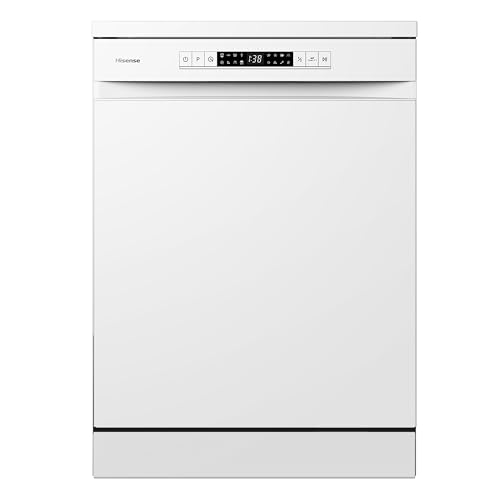
Hisense’s 13-place dishwasher is a straightforward choice for busy kitchens. Its short wash tackles lightly soiled plates when the next meal is approaching, while a height-adjustable upper basket makes space for taller pans. The Dry+ option helps leave dishes drier after washing.
Pros
- 24-hour delay start lets you plan the wash around your day
- Glass programme provides a gentler setting for drinkware
- Dedicated one-hour programme offers another quick option
- Stainless-steel interior is durable and easy to maintain
- Aqua Protect system helps guard against overflowing
Buying Guide & FAQ
How to Choose the Best Dishwasher
A good dishwasher doesn’t need dozens of programmes or expensive extras. Focus on the features that will make the biggest difference to your daily routine.
Choose the Right Size and Capacity
-
Full-size dishwashers (60cm): Usually accommodate 12–16 place settings, making them suitable for families and households with plenty of washing-up.
-
Slimline dishwashers (45cm): Ideal for smaller kitchens, generally offering around 9–10 place settings without occupying as much space.
-
Freestanding or integrated: Freestanding models are easier to accommodate in many kitchens, while integrated dishwashers sit behind a matching cupboard door for a seamless finish.
Always measure the available height, width and depth, including space for plumbing connections, before ordering.
Check Energy and Water Efficiency
-
Energy rating: UK dishwasher energy labels range from A to G, with A being the most efficient. Compare the electricity consumption per 100 eco cycles for a clearer picture of running costs.
-
Water consumption: Check the litres used per eco cycle, particularly if you run your dishwasher frequently.
-
Eco programme: Uses less energy and water than many standard programmes, although the cycle usually takes longer.
A more efficient dishwasher can help reduce everyday running costs, especially in a busy household.
Look for Useful Features
-
Adjustable racks: Make room for taller glasses, large plates and awkward cookware.
-
Quick wash: Convenient for lightly soiled dishes when you’re short on time.
-
Automatic programmes: Adjust washing conditions according to the load on compatible models.
-
Extra drying: Helpful for reducing moisture left on glasses, crockery and plastic containers.
-
Low noise: Worth prioritising in open-plan kitchens, particularly if you run the machine in the evening.
How to Get Better Cleaning Results From Your Dishwasher
Even a reliable dishwasher can leave dishes dirty if it’s loaded incorrectly. A few simple habits can improve cleaning performance and help your machine last longer.
-
Scrape off leftover food: Remove large food scraps before loading, but there’s usually no need to rinse plates under the tap.
-
Load dishes correctly: Place large plates, pans and suitable cookware on the lower rack, with glasses, cups and smaller items above.
-
Avoid overcrowding: Leave enough space between dishes for water and detergent to reach every surface.
-
Check the spray arms: Make sure they can rotate freely without hitting tall plates or utensils.
-
Use the right programme: Eco mode is suitable for many everyday loads, while heavily soiled cookware may benefit from an intensive cycle.
-
Clean the filter regularly: Removing trapped food helps prevent unpleasant smells and poor washing performance.
-
Use dishwasher salt when required: In hard-water areas, keeping the built-in water softener supplied with the correct salt helps reduce limescale.
Practical tip: If your dishwasher has an adjustable upper rack, try changing its height before leaving large plates or tall glasses out of the wash. It can make a surprising difference to how much you fit inside.
Are Dishwashers Cheaper Than Washing Up by Hand?
For full loads, modern dishwashers can use considerably less water than washing dishes under a running tap. Efficient models can also use less energy than heating large amounts of water for handwashing.
Running costs depend on the appliance, electricity tariff and washing habits. Using a reasonably full load and the eco programme generally offers better efficiency.
Can You Put Pots and Pans in a Dishwasher?
Many stainless steel pans and dishwasher-safe cooking utensils can go in the dishwasher, although you should always check their care instructions.
Cast iron, wooden utensils and some non-stick cookware are better washed by hand. High temperatures and strong detergents can damage certain finishes or materials over time.
Why Do Glasses Sometimes Come Out Cloudy?
Cloudy glasses are often caused by hard-water deposits, detergent residue or permanent glass corrosion known as etching.
If the cloudiness comes from mineral deposits, adjusting the water-softener settings and using dishwasher salt or rinse aid as instructed may help. However, glass damaged by etching cannot usually be restored to its original clarity.
Our Top 3 Picks