
Best Countertop Reverse Osmosis Water Filters for Home Use
A countertop reverse osmosis system can provide highly filtered drinking water without the hassle of installing a conventional under-sink unit. But models differ in how much water they produce, the contaminants they’re verified to reduce and how often they need refilling. Some even offer instant hot water or mineral-enhancing filtration. Our review of the best countertop reverse osmosis systems covers the features worth considering, helping you find a convenient option for everyday drinking water.
 01
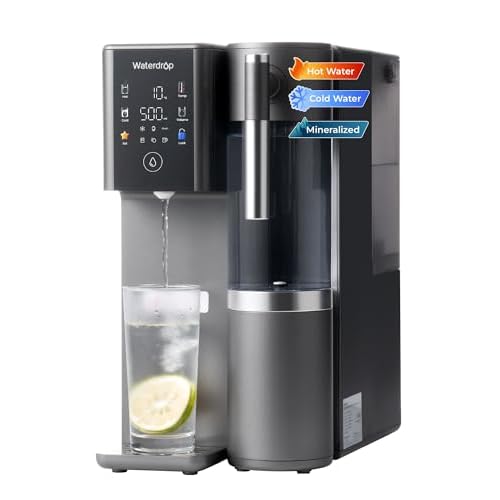
Waterdrop M6HG combines reverse osmosis filtration with hot-water dispensing, making it useful for drinking water and tea or coffee throughout the day. Its glass pitcher can be chilled in the fridge, while the countertop unit heats water on demand without any permanent plumbing.
Pros
- Five temperature presets simplify preparing different drinks
- Dispensing volumes start at 150ml for smaller cups
- Separate wastewater compartment makes disposal straightforward
- UK three-pin plug fits standard household sockets
- Replacement filter is designed to last up to 12 months
 02
Waterdrop A2G dispenses both cool and hot water from a single countertop system, suiting households that switch between cold drinks, tea and coffee. Six temperature settings make it easy to prepare different drinks, while the removable pitcher lets you take water straight to the table.
Pros
- Five dispensing-volume choices reduce overfilling
- Favourite setting remembers preferred drink settings
- Touchscreen shows water temperature as it dispenses
- Filter-change reminders help plan maintenance
- Remineralisation stage adds selected minerals for taste
 03
For households that mainly need filtered water for hot drinks, the Waterdrop K19-HG brings purification and heating together. It heats water in seconds, with fine temperature adjustments for different drinks. A generous feed tank also means fewer refills during a busy day.
Pros
- Three-in-one cartridge keeps filter replacement straightforward
- On-screen filter reminders help plan maintenance
- Five volume settings allow more precise dispensing
- Mineral stage adds selected minerals after RO filtration
- System meets NSF/ANSI 58 and 372 certification standards
 04
Bluevua RO100ROPOT is a practical option for households that prefer serving filtered water from a glass carafe. Simply fill the tank, start a filtration cycle and pour from the jug, or chill the water in the fridge first. No kitchen plumbing needs changing.
Pros
- Different dispensing volumes can be selected at the controls
- Glass carafe is safe for the fridge and dishwasher
- Automatic rinsing helps maintain the filtration system
- Low-power standby reduces electricity use between cycles
- Filter-life display makes replacement timing easier to follow
Cons
- Imported stock may require a UK-compatible plug adaptor
 05
Frizzlife WB99-H makes filtered water at temperatures ranging from ambient to 100°C, covering everything from drinking water to hot drinks. Its selectable dispense volumes help with different cups, while the removable jug can be refrigerated. The large refill tank suits regular use throughout the day.
Pros
- Removable feed tank is easy to refill and clean
- Quick-change RO cartridge simplifies maintenance
- Alkaline post-filter adds minerals back for taste
- Optional carbon-only filter is available for non-mineralised water
- Connects to a standard UK mains socket without plumbing work
Cons
- Alkaline post-filter needs replacing approximately every 90 days
 06
Bluevua RO100ROPOT-Lite combines reverse osmosis, UV treatment and mineralisation in a smaller countertop unit designed for one or two people. The glass carafe is easy to carry to the table, and the included infuser gives you a simple way to make fruit-flavoured drinking water.
Pros
- One-touch controls offer selectable dispensing volumes
- Digital TDS display tracks dissolved-solid levels
- Twist-fit main filter is simple to replace
- Carafe markings help you track daily water intake
- WQA certification to NSF/ANSI/CAN 372 covers lead-free materials
Buying Guide & FAQ
How to Choose a Countertop Reverse Osmosis System
A good countertop RO system should provide effective filtration without being difficult or expensive to maintain. Focus on these important features.
Filtration Quality and Certifications
-
Multi-stage filtration: Look for a combination of sediment, activated carbon and reverse osmosis membrane filtration. These stages work together to reduce particles, certain chemicals and dissolved substances.
-
Independent certification: NSF/ANSI 58 is a recognised standard for reverse osmosis systems. Check which specific contaminant-reduction claims are certified rather than relying on broad marketing promises.
-
Remineralisation: Some models include a final filtration stage that adds minerals back into the purified water, which can improve its taste.
Water Capacity and Convenience
-
Water tank size: A larger clean-water reservoir is convenient if several people will use the system throughout the day.
-
Filtration speed: Check how long the machine takes to produce a full tank of drinking water, particularly if you frequently fill bottles or prepare hot drinks.
-
Useful dispensing features: One-touch dispensing, selectable water volumes and adjustable temperature settings can make everyday use easier.
How to Use and Maintain a Countertop Reverse Osmosis System
Most self-contained countertop models are straightforward to operate, but regular cleaning and correct filter maintenance are important for keeping your drinking water fresh.
-
Prepare the system before first use: Follow the manufacturer’s initial flushing procedure to clear manufacturing residues and prepare the filters.
-
Use suitable drinking water: Fill the reservoir with cold potable tap water unless the manufacturer specifies otherwise.
-
Empty the wastewater tank: Where the unit collects rejected water, discard it as directed rather than repeatedly topping up the same concentrated water.
-
Keep the reservoirs clean: Wash removable tanks according to the manufacturer’s instructions to prevent residue and bacterial build-up.
-
Replace filters on schedule: Follow the recommended replacement intervals, even if the water still looks clear.
-
Store filtered water properly: Keep drinking-water containers clean and follow the manufacturer’s guidance on how long treated water can remain in the reservoir.
Practical tip: If your system has a filter-life indicator, check it regularly and keep spare cartridges available. This helps avoid interruptions when a replacement becomes due.
Our Top 3 Picks