✓ Reviewed by the Ultimate House Team
Choosing an Electric Ceramic Radiator for Your Home
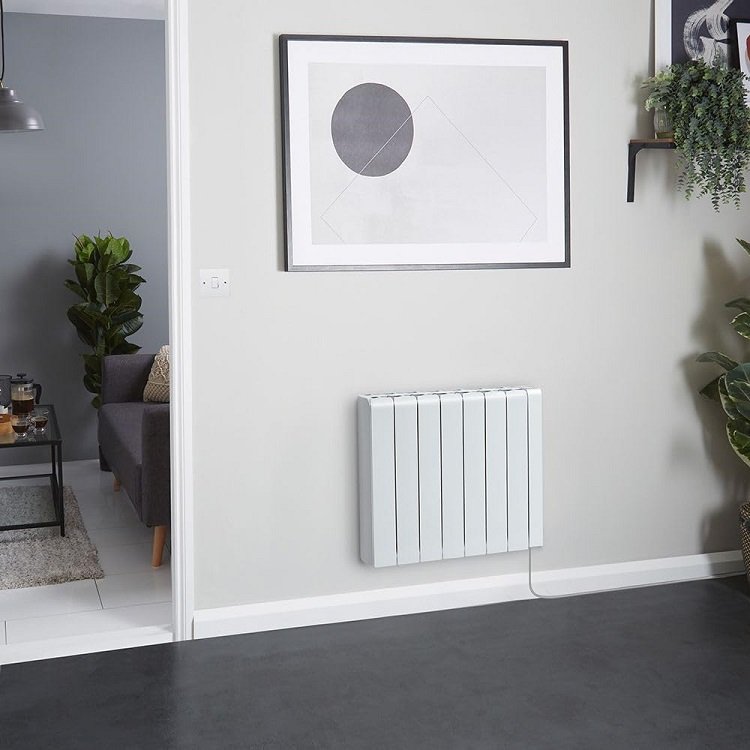
Electric ceramic radiators are useful when you want controllable heating without connecting to a central heating system. The ceramic core can retain warmth after the heating element switches off, while programmable controls can help match heating to your routine. The right wattage depends on the room, while features such as Wi-Fi control, timers, thermostats and open-window detection can make everyday use more convenient.
» OUR TOP PICKS

01 · Best Overall
MYLEK Ceramic Radiator Panel Heater
Excellent
KEY DETAILS
Power: 2000W | Control: Wi-Fi app or digital display | Heating: Ceramic core with aluminium body | Installation: Wall mounted or freestanding | Thermostat: Advanced Triac intelligent thermostat | Modes: 3 heating modes including frost protection | Safety: Child lock | Dimensions: 82.5cm L x 58cm H x 11cm D with bracket
The MYLEK ceramic radiator combines a 2000W heating output with Wi-Fi control, programmable settings and a digital display. Its ceramic core and aluminium body are designed to retain and distribute warmth, while wall mounting or freestanding use gives you flexibility over placement.
WHAT WE LIKE

02 · Best for Multiple Heating Modes
Warmehaus 2000W Electric Ceramic Radiator
Excellent
KEY DETAILS
Power: 2000W | Control: Wi-Fi and touchscreen | Heating: Ceramic core with aluminium body | Installation: Wall mounted or freestanding | Timer: 7-day and 24-hour | Modes: 5 operating modes | Safety: Child lock and overheat protection | Dimensions: 57 x 71.4 x 9cm
The Warmehaus 2000W ceramic radiator combines an aluminium body with smart controls and several heating modes. It can be wall mounted or moved around on its portable wheels, while the timer, window-open function and touchscreen provide useful control over when and how it heats.
WHAT WE LIKE

03 · Best BUDGET
Beldray Smart Ceramic Core Radiator 1000W
very good
KEY DETAILS
Power: 1000W | Control: Wi-Fi and smartphone | Heating: Ceramic core | Installation: Wall mounted or freestanding | Timer: 7-day | Display: LCD | Mobility: 360-degree wheels | Safety: Lockable screen and overheat protection
The Beldray 1000W Smart Ceramic Core Radiator is a more compact heating option with Wi-Fi control and programmable settings. It can be mounted on a wall or moved around on 360-degree wheels, while the LCD display, digital thermostat and open-window function simplify everyday temperature management.
WHAT WE LIKE

04
SolAire Exo Ceramic Core Electric Radiator
very good
KEY DETAILS
Power: 1000W | Control: Wi-Fi or manual | Heating: Ceramic core with aluminium body | Installation: Wall mounted | Thermostat: Digital thermostat | Timer: Yes | Cable: 1.2m UK plug cable | Guarantee: 3 years
The SolAire Exo is a 1000W ceramic core radiator with an aluminium body and smart Wi-Fi controls. It is designed for wall mounting and includes thermostat and timer controls, with the 1000W version specified for rooms up to approximately 12.5m² according to the supplied product information.
WHAT WE LIKE
If you want a broader overview of home heating options and how different systems work, see our complete guide: A Guide to Home Heating Systems.
Buying Guide & FAQ
What to Consider When Choosing an Electric Ceramic Radiator
Heating power
The size of the room plays a major role in determining the right radiator. Smaller bedrooms and home offices may only require a lower wattage model, while larger living rooms and open-plan spaces often benefit from 1500W to 2000W units.
Smart controls
Many modern ceramic radiators include WiFi connectivity, app control, programmable schedules, and digital thermostats. These features allow more precise temperature management and can help reduce unnecessary energy consumption.
Installation options
Some ceramic radiators are designed purely for wall mounting, while others can be used either wall mounted or freestanding. Flexible installation can be useful if you plan to move the heater between rooms.
Energy-saving features
Features such as adaptive start, open-window detection, eco modes, and weekly scheduling can help improve efficiency while maintaining a comfortable temperature throughout the day.
Safety functions
If the radiator will be used in family homes, look for features such as child locks, overheat protection, and safety shut-off systems for additional peace of mind.
How Do Ceramic Radiators Work?
Ceramic radiators use an electric heating element combined with a ceramic core or plate. As the element heats up, the ceramic material absorbs and stores thermal energy before gradually releasing it into the room.
This heat-retention capability helps maintain a more stable temperature compared with basic electric heaters that cool down quickly once switched off.
Many ceramic radiators combine radiant heat with natural convection, creating comfortable and even warmth throughout the room without relying on noisy fans.
Are Ceramic Radiators Energy Efficient?
Ceramic radiators are often considered one of the more efficient forms of electric room heating.
The ceramic core continues to release heat after the heating element stops drawing power, helping reduce the frequency of heating cycles. This allows many models to maintain a comfortable temperature using less electricity than traditional electric heaters that constantly switch on and off.
Efficiency can be improved further when combined with programmable thermostats, timers, and smart controls that prevent unnecessary heating.
Do Ceramic Radiators Heat a Room Evenly?
One of the main advantages of ceramic radiators is their ability to provide steady and balanced heat distribution.
Unlike some fan heaters that create concentrated hot spots, ceramic radiators release warmth gradually across the room. This helps create a more natural and comfortable environment, particularly in bedrooms, living rooms, and home offices where consistent temperatures are preferred.
Because they operate without fans, they are also extremely quiet, making them suitable for spaces where noise can be distracting.
Ceramic Radiators vs Oil-Filled Radiators
Both ceramic and oil-filled radiators are designed to retain heat, but they work in slightly different ways.
Ceramic radiators generally heat up faster and offer more modern control features, including smart thermostats and WiFi connectivity. They also tend to have a slimmer appearance that suits contemporary interiors.
Oil-filled radiators usually take longer to reach their operating temperature but can continue releasing heat for an extended period after being switched off.
For most households looking for a balance between fast heating, energy efficiency, and modern controls, ceramic radiators are often the more versatile option.
How Long Do Electric Ceramic Radiators Last?
A quality ceramic radiator can last many years when properly maintained.
Most modern units require very little maintenance beyond occasional dust removal and ensuring ventilation areas remain unobstructed. Because there are few moving parts, wear and tear is generally lower than with fan-based heating systems.
Choosing a reputable model and following the manufacturer’s instructions can help maximise lifespan and maintain efficient performance over time.