✓ Reviewed by the Ultimate House Team
Compact Circular Saws for Easier Cutting
A mini circular saw can be easier to handle than a full-sized model when you are working on smaller DIY jobs, furniture panels or general home improvements. For women and older users in particular, factors such as handle design, weight, cutting control and safety features can make a noticeable difference. The models below range from compact corded saws with adjustable cutting depths to a cordless brushless option, giving you different ways to balance cutting power, manoeuvrability and convenience.
» OUR TOP PICKS

01 · Best Overall
DOVAMAN Mini Circular Saw
Excellent
KEY DETAILS
Motor: 710W copper | Speed: 3,500rpm | Cutting depth: 43mm at 90° | Bevel depth: 29mm at 45° | Power: Corded electric | Blade set: 6 blades | Guide: Built-in laser and edge guide | Materials: Wood, soft metal, plastic and tile
The DOVAMAN MCS01A is a compact corded circular saw designed for controlled cutting across several materials. Its metal auxiliary handle, larger base and built-in laser provide additional support during use, while adjustable depth and bevel settings make it suitable for different DIY cutting tasks.
WHAT WE LIKE

02 · Best Budget
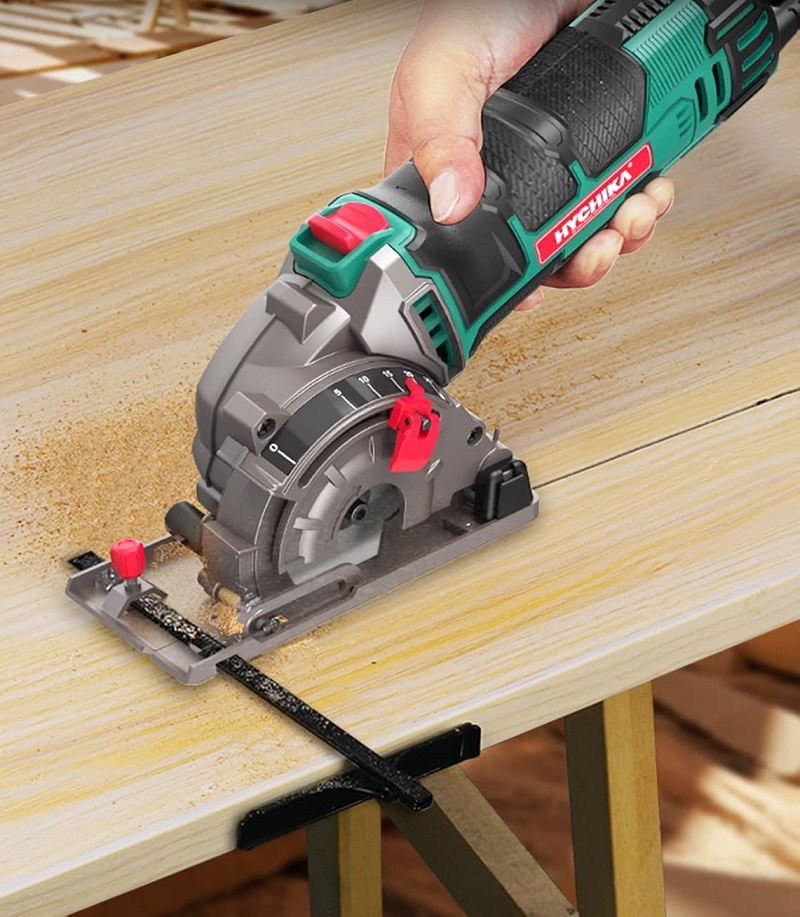
HYCHIKA 750W Mini Circular Saw
Excellent
KEY DETAILS
750W pure copper | Speed: 3,500rpm | Cutting depth: 48mm at 90° | Bevel depth: 32mm at 45° | Power: Corded electric | Blades: 3 included | Guide: Scale ruler | Materials: Wood, plastic, plasterboard, soft metal and tiles
HYCHIKA’s compact circular saw combines a 750W motor with adjustable cutting depth and bevel angle. The soft rubber handle and non-slip design are intended to improve grip, while the double protection switch and metal gear shield provide additional safeguards during DIY cutting work.
WHAT WE LIKE

03 · Best for Compact DIY Jobs
GALAX PRO 580W Mini Circular Saw
very good
KEY DETAILS
580W | Speed: 3,500rpm | Cutting depth: 28.5mm | Bevel adjustment: 0–45° | Power: Corded electric | Blade size: 85mm | Blades: 3 included | Guide: Laser guide rail
The GALAX PRO mini circular saw is a smaller corded model intended for wood, PVC, plastics, soft metal and brick cutting. Its adjustable depth, laser guide and rubber handle make it suited to straightforward DIY projects where compact handling and controlled cutting are more important than maximum cutting capacity.
WHAT WE LIKE

04 · Best Cordless Option
DCA 20V Brushless Mini Circular Saw
very good
KEY DETAILS
20V brushless | Speed: 4,200/6,700rpm | Cutting depth: 45mm at 0° | Bevel depth: 33mm at 45° | Battery: 4.0Ah lithium-ion | Blade size: 125mm | Power: Battery powered | Support: 24-month technical support
The DCA 20V mini circular saw provides cordless cutting without a mains cable getting in the way. Its slim handle, soft rubber grip and brushless motor are designed for controlled handling, while two speed settings and bevel adjustment provide flexibility for timber, boards, shelving and furniture projects.
WHAT WE LIKE
Buying Guide & FAQ
What to Look for in a Mini Circular Saw
Lightweight and Easy to Handle
A compact saw should feel easy to control rather than tiring to hold. A weight of around 1.5-3 kg is generally manageable for DIY work, although the balance of the tool matters just as much as the weight. If you’ll be making lots of cuts overhead or working for longer periods, a lighter model can make a noticeable difference.
Comfortable Grip
Look for a handle that feels secure in your hand, preferably with a non-slip or rubberised surface. Good grip helps you keep the saw steady and follow your cutting line accurately. If you have smaller hands, check that the handle and trigger are easy to reach without having to stretch your fingers.
Easy-to-Use Controls
The controls should be simple to operate while keeping both hands in a safe position. Useful features include an accessible power switch, clear depth adjustment and an easy-to-read cutting guide. A model with straightforward adjustments is particularly useful if you’re switching between different materials or cutting depths.
Adjustable Cutting Depth
Depth adjustment is worth having if you work with different thicknesses of wood, boards or other materials. Set the blade so it extends only slightly below the material rather than exposing more of the blade than necessary. This gives you better control and reduces unnecessary resistance during the cut.
Blade Size and Type
Check which blade diameter and blade types the saw accepts before buying. Different blades are designed for different materials, so a model supplied with a suitable wood blade may not be ready for cutting metal, tiles or other materials. Replacement blades should also be readily available.
What Can You Cut With a Mini Circular Saw?
Mini circular saws are useful for a range of DIY jobs, but the blade must be suitable for the material. Always check the manufacturer’s instructions before cutting anything other than the materials the saw is designed for.
- Wood: Suitable models can cut plywood, MDF, softwood and some hardwood boards. They’re handy for shelving, trim, panels and small furniture projects.
- Plastic: With the appropriate blade, some mini saws can cut plastic sheets and certain PVC materials. Support the material properly to reduce movement.
- Metal: Only use a saw and blade specifically rated for metal cutting. Some models can handle thin aluminium or sheet metal, while others are designed only for wood and similar materials.
- Tiles: Certain mini circular saws can be fitted with diamond blades for cutting tiles. Check that the specific saw is approved for this type of work.
- Drywall: A suitable blade can make quick cuts in plasterboard, particularly when making openings or trimming panels.
How to Use a Mini Circular Saw
Using one is fairly straightforward, but setting it up properly makes a big difference to the quality and safety of the cut.
- Mark your cutting line – Measure carefully and draw a clear line on the material. Use a straightedge or guide if you need a particularly accurate cut.
- Secure the material – Clamp the workpiece firmly to a stable surface. Never try to hold a small piece of material in your hand while cutting it.
- Fit the correct blade – Make sure the blade is suitable for the material and correctly fitted. Unplug or remove the battery before changing the blade.
- Set the cutting depth – Adjust the blade so it extends only a little below the material. The exact setting depends on the thickness of the workpiece and the manufacturer’s instructions.
- Check the cutting path – Make sure there are no screws, nails, cables or other objects in the path of the blade.
- Start the saw before entering the material – Hold the saw firmly and allow the blade to reach its operating speed before beginning the cut.
- Guide it steadily along the line – Let the blade do the work. Don’t force the saw or push it faster than it can comfortably cut.
- Keep the saw moving – Avoid stopping halfway through a cut unless necessary, as this can affect control and the finish.
- Switch off and wait for the blade to stop – Don’t put the saw down or lift it away from the workpiece until the blade has completely stopped.
How Long Do Mini Circular Saw Blades Last?
There isn’t a fixed lifespan for a mini circular saw blade. It depends on the material you’re cutting, the blade’s quality, how frequently you use it and whether you’re forcing the saw through the workpiece. For occasional DIY use, a good-quality blade can last a long time. Frequent cutting of dense wood, abrasive boards or other demanding materials will wear it out much faster.
Signs that a blade may need replacing include:
- Cuts become rough or ragged rather than clean.
- The saw takes noticeably longer to get through the material.
- You need to apply more pressure than usual.
- The blade shows visible damage or excessive wear.
- The saw vibrates more than normal during cutting.
To extend blade life, use the correct blade for each material, avoid forcing the saw and keep the blade clean. If the blade is damaged, don’t continue using it simply because it still cuts; replace it with the correct type recommended for the saw.