
When several colleagues want coffee at the same time, a small office kitchen can quickly become a bottleneck. The right coffee machine makes the morning round easier, whether everyone prefers freshly ground espresso, milk-based drinks or a pot of filter coffee to share. It should also be straightforward to refill and clean, especially if no one is responsible for looking after it. This review compares five office coffee machines for UK workplaces, covering bean-to-cup, filter and pod models for different team sizes and drinking habits.
Office Coffee Machines for Busy Workdays
Best Coffee Machine for an Office
 01
De’Longhi’s Magnifica S works well in a small office where colleagues want freshly ground coffee without handling capsules. It prepares one or two espressos at a time, with adjustable strength for different tastes. The steam wand also gives milk-drink fans a cappuccino option.
Pros
- Built-in grinder removes the need for separate equipment
- Pre-ground coffee compartment accommodates decaf
- Adjustable spouts fit different cup heights
- Removable infuser simplifies regular cleaning
- Automatic rinsing helps maintain the coffee circuit
 02
Philips 5400 LatteGo is a strong fit for offices where coffee preferences vary from espressos to cappuccinos. Twelve preset drinks and four saved user profiles make ordering straightforward, while the detachable milk system is easier to clean after a busy morning than traditional milk tubing.
Pros
- One-touch milk drinks save colleagues manual frothing
- Separate guest option avoids overwriting saved preferences
- Two-part LatteGo container rinses without internal tubes
- AquaClean compatibility helps reduce descaling frequency
- Removable brewing group makes routine upkeep easier
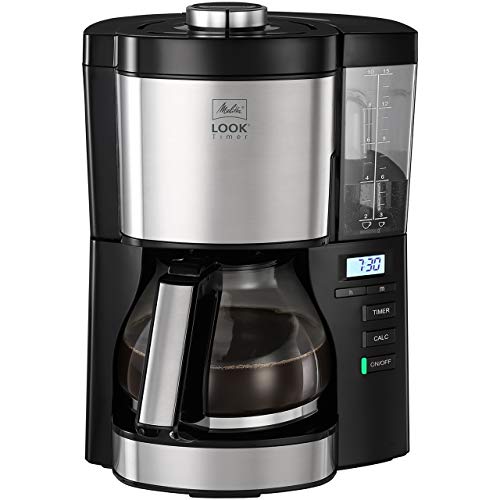 03
Melitta Look V Timer is designed for the office coffee round rather than one cup at a time. Its glass jug brews up to ten standard cups, and the programmable timer can have coffee ready for the morning meeting. AromaSelector lets colleagues adjust the strength.
Pros
- Brews several servings in one cycle
- Ground coffee avoids single-use pod purchases
- Removable water tank makes filling at the sink easier
- Adjustable water-hardness setting supports descaling care
- Dishwasher-safe jug and filter insert simplify cleaning
 04
Bosch Tassimo My Way 2 offers a straightforward drinks station for teams that want coffee, tea and hot chocolate from one machine. Barcode-reading T DISCs automate brewing, while saved preferences for volume, temperature and strength make it easy for colleagues to prepare their usual order.
Pros
- One-button operation requires minimal instruction
- Four memory slots store favourite drink settings
- Wide capsule range caters for varied preferences
- Removable drip tray accommodates different cup sizes
- Automatic cleaning and descaling programmes simplify upkeep
 05
Nespresso Vertuo Pop by Krups suits a small office, reception desk or meeting room with limited worktop space. It makes espresso and larger coffees with one button, using barcode recognition to choose brewing settings. The compact water tank is manageable for lighter daily use.
Pros
- 30-second heat-up suits occasional coffee breaks
- Automatic shut-off helps avoid unnecessary standby time
- Used-capsule container keeps the counter tidier
- Removable tank is easy to refill at the sink
- Compact footprint leaves room for other break-room essentials
How to Choose an Office Coffee Machine
Start with the number of drinks your team makes on a normal working day. A machine that suits two people sharing an office may become frustrating when ten colleagues want coffee at the same time.
- Type of coffee: Bean-to-cup models grind whole beans for each drink, while filter machines make several servings together. Pod machines are quick for occasional individual cups but require compatible capsules.
- Daily demand: Look at how many cups can be made before the water tank, grounds container or used-pod holder needs attention. A large tank is helpful, but the time spent preparing each drink matters too.
- Milk drinks: Automatic milk systems make cappuccinos and lattes easier for different staff to prepare. A manual steam wand needs more involvement and cleaning between uses.
- Space and access: Check the machine’s footprint and allow space to lift the water tank, refill beans and remove the drip tray, particularly beneath wall cupboards.
Bean-to-Cup, Filter or Pods for a Shared Office?
A bean-to-cup machine suits a team that values espresso-style coffee and will use it throughout the day. Filter brewing makes more sense when several people want a straightforward black coffee at roughly the same time; a full jug can be shared rather than making cups one by one.
Pod machines work well where demand is lighter and staff prefer different drinks. The ongoing cost per cup and the need to keep compatible capsules in stock are worth considering. For more on espresso and milk-based drinks, see our coffee machines for flat whites comparison.
What Will It Cost to Keep Running?
Don’t compare purchase prices alone. Whole beans, ground coffee and capsules have different costs per serving, and milk drinks add another expense. Estimate the number of coffees made each week and multiply it by the cost of your preferred beans, grounds or pods. This gives a more useful picture than assuming the cheapest machine will be cheapest to operate.
Cleaning and Everyday Upkeep
An office machine needs a cleaning routine that staff can keep up with. Empty drip trays and used grounds regularly, rinse milk containers and other milk-contact parts after use, and descale the machine according to its instructions. A model with easily removable parts will be less of a chore in a shared kitchen.
Keep the machine where staff can reach the sink and refill it without moving other appliances. Our guide to choosing kitchen appliances also covers planning worktop space and access for everyday maintenance.