
An EPC rating is a useful starting point for improving your home’s energy performance, but the most expensive upgrade is not necessarily the best first move. Check the property’s existing Energy Performance Certificate, identify the recommended measures and deal with obvious heat loss before choosing major equipment. This guide explains which improvements may help and what UK homeowners should check before paying for them.
Understand your current EPC rating
An Energy Performance Certificate normally places a property in a band from A to G and includes recommendations for possible improvements. The displayed score is based on a standard assessment of the building, not your actual utility bills. Ratings depend on the methodology in use, and actual savings vary with occupancy, tariffs and heating habits.
Check the official register for an existing certificate and its suggested measures. If you have made substantial changes, a new assessment may be worthwhile. Keep evidence of insulation, glazing and heating upgrades so the assessor can identify them rather than having to use default assumptions.

Which energy upgrades should you prioritise?
Start with a whole-house approach: fix water ingress and ventilation problems, reduce uncontrolled heat loss, then assess heating improvements. The right order differs by construction and budget.
| Improvement | Best starting point | Check before spending |
|---|---|---|
| Loft insulation | Little or no insulation at ceiling level | Ventilation, access and existing depth |
| Cavity or solid wall insulation | Uninsulated external walls | Wall construction, condition, damp and exposure |
| Heating and controls | Old or poorly controlled system | Heat-loss design and system suitability |
| Windows and draught-proofing | Single glazing or obvious air leaks | Ventilation and likely value for money |
| Solar PV | Suitable roof and daytime electricity demand | Roof, shading, permissions and export arrangements |
Insulate the roof, walls and floors
If your loft has little insulation, adding a suitable depth of mineral wool or an equivalent system can be a sensible early measure. A typical uninsulated loft may require around 270 mm of conventional mineral wool to meet familiar guidance, but existing build-up and the chosen product matter. Maintain ventilation at the eaves, protect electrical fittings and check safe access before working in the loft.
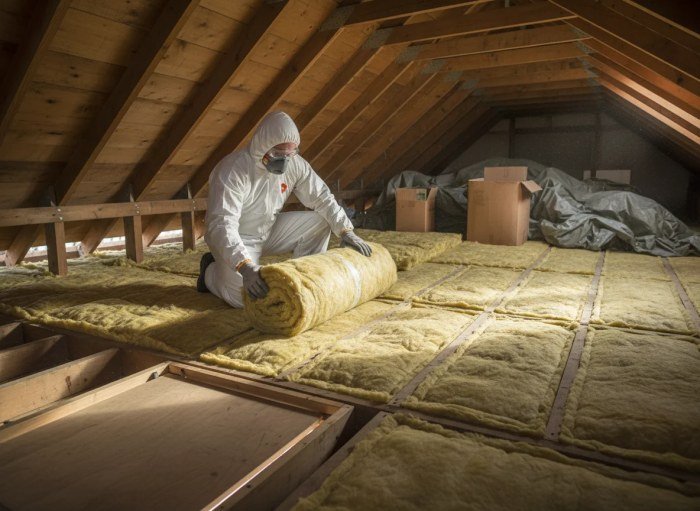
Wall insulation can be valuable, but cavity wall filling is only suitable following a proper assessment of construction, rain exposure and damp. See our cavity wall retrofit guide for the essential survey checks. Traditional solid walls often require more careful moisture design. Suspended timber floors may benefit from insulation too, provided underfloor ventilation is maintained.
Review heating and hot-water controls
An inefficient or poorly controlled heating system may offer a worthwhile improvement. Before replacing a working boiler, consider whether existing controls, radiator balancing or maintenance would address the problem. A new condensing boiler or appropriately designed heat pump can be part of a broader plan, but running costs and EPC results depend on the home and its current system.
Heat pumps can work in older homes, but they need a suitable heat-loss assessment and properly designed radiators or other heat emitters. Funding through the Boiler Upgrade Scheme varies by technology and eligibility; check the current rules rather than assuming one fixed grant. For related household decisions, our guide to home heating systems explains common options.
Smart thermostats and thermostatic radiator valves can improve control, while a properly insulated hot-water cylinder can reduce standing heat loss. If you are selecting supplementary electric heating, our oil-filled radiators with timers and thermostats review compares controls and practical features. Portable electric radiators are not a substitute for a correctly designed whole-home heating upgrade.
Improve windows, doors and draught-proofing
Single glazing and failed seals may contribute to heat loss and discomfort. Upgrading windows can help, but draught-proofing and appropriate secondary glazing may be more economical in some homes. Keep required ventilation and suitable escape routes in mind; do not seal purpose-provided vents.
If indoor humidity or condensation is a problem, address the cause rather than simply adding more seals. Our heating and air-quality guide covers ventilation and moisture management.
Lighting and solar power
Replacing old halogen or incandescent lamps with LEDs is a relatively simple electricity-saving improvement. It does not necessarily deliver a large change in EPC band on its own, but is an inexpensive measure to consider.
Solar panels can improve a property’s modelled energy performance where the roof is suitable. Compare installation quotes, expected generation, roof condition, shading, equipment life and your daytime electricity use. Our guide to solar panel sizes helps explain the space and system choices, but a professional survey is needed for a reliable estimate.
Current EPC requirements for private landlords
In England and Wales, the existing minimum energy efficiency standard for most relevant private rented homes remains EPC E, unless a valid exemption applies. The government has announced a higher standard from 1 October 2030, subject to the implementing rules and relevant exemptions. The approach includes new EPC metrics, so landlords should follow the official landlord guidance rather than relying on an old EPC points checklist.
Regulations and assessment methods differ across the UK. Landlords in Scotland or Northern Ireland should check their devolved administration’s requirements before planning expenditure.
Grants, cost estimates and expected results
Funding can change, and schemes may close or alter eligibility. The Energy Company Obligation (ECO4) has specific eligibility and delivery rules; do not assume every household qualifies. The Boiler Upgrade Scheme and local assistance have separate criteria. The existing gov.uk link takes you to the EPC register; for funding options check GOV.UK’s current home energy-efficiency support guidance. The Great British Insulation Scheme ended on 31 March 2026.
Avoid treating suggested EPC-point gains as guaranteed. A particular home may move up one or more bands with a well-chosen package, while the same measure may have little effect elsewhere. Ask an accredited assessor or qualified retrofit professional to model realistic options, then use written quotes and running-cost estimates to choose the work.
A practical order of work
- Retrieve the EPC and note its current rating, recommendations and evidence gaps.
- Check damp, ventilation and building defects before adding insulation.
- Compare proportionate fabric improvements with the property’s construction and budget.
- Review the heating system and controls after considering heat loss.
- Obtain quotes, check grants and installer credentials, and keep completion certificates for reassessment.
The best EPC improvement plan is one that fits the building rather than a headline points promise. Prioritise safe fabric upgrades, obtain accurate specifications and reassess only when worthwhile changes have been completed.